















This 8-week full-body muscle-building program was designed for beginners at the gym, with a clear goal: to maximize the hypertrophic stimulus while ensuring safe, consistent form and manageable fatigue over 3 workouts per week (≈75 min).
A Full Body A/B/C architecture designed for rapid progress
Choosing to do full-body workouts three times a week meets two needs for beginners:
- Repeat the motor patterns (squat/hinge/push/pull) often to solidify your technique without waiting a week between two exposures.
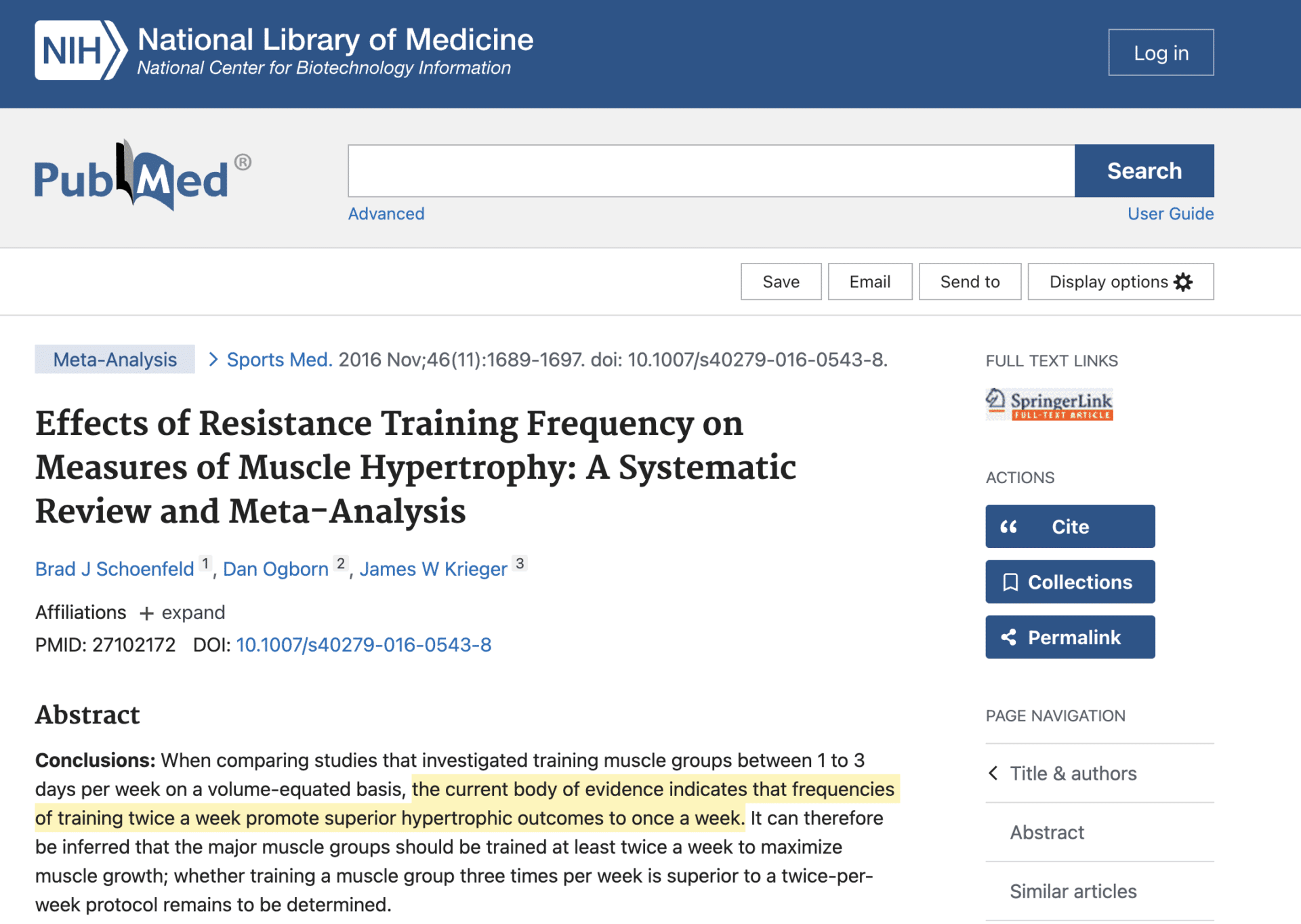
- Distribute the volume over the week to avoid "marathon" split sessions, while achieving a useful volume per muscle group. According to the literature, training a muscle at least twice a week is generally beneficial (especially when compared to once a week), and this is one of the reasons for the full-body structure.
The three sessions are deliberately redundant in terms of the essentials (push + pull + lower body + core) but differentiated by the variations:
- A: "guided" and stable base (press, machines, pulleys) → high performance and learning.
- B: Focus on strength/mass with fundamental "signature room" exercises (bench press + hip thrust) + vertical pull.
- C: Targeted volume and finishing (one-sided, iso legs, deltoids, arms, abs) → hypertrophic density without causing systemic fatigue.
Exercise selection: performance, safety, stimulus-to-fatigue
The main focus is on achieving an excellent stimulus/fatigue ratio: lots of machines/pulley systems and a few barbell exercises, but only when they provide a net benefit.
When bulking up, athletes will want to accumulate high-quality sets over eight weeks; this involves exercises such as:
- stable (less limiting technique),
- progressable (easy to follow load/reps),
- tolerant (less joint irritation),
- and which effectively "load" the target muscle.
In concrete terms:
- Lower body: leg press (feet together) + hack squat + Bulgarian split squat + leg extension. Quadriceps/glutes coverage with a guided bilateral mix (highly progressive) and unilateral mix (balance, stability, recruitment).
- Posterior chain “hinge”: Romanian Deadlift (RDL) barbell + hip thrust barbell + back extension machine. The idea: hamstrings/glutes/erectors, but with complementary variations: active stretching (RDL), strong contraction at the end of the range of motion (hip thrust), postural endurance (extensions).
- Upper body push: chest press machine, barbell bench press, cable chest press, + shoulder press machine. The athlete alternates between a very stable push (machine), a "reference" push (bench), and a more "joint-friendly" variation (cable) to maintain volume.
- Upper body pull: seated cable row, chest-supported row machine, close-grip and wide-grip lat pulldown. This locks in scapular balance and back density by combining horizontal and vertical pulls.
- Smart assistance: triceps pushdown, preacher curl machine, cable curl, lateral raises. When bulking up, arms/deltoids respond well to direct volume, but without taking the place of the big bosses.
- Trunk: plank, Pallof press, Roman chair knees. Anti-extension + anti-rotation + controlled flexion: comprehensive, useful, and inexpensive in recovery.
Volume: importance of actual weekly volume
Progression is not based on the principle of "heavier every week at all costs." It is built around the factor most closely correlated with hypertrophy: effective weekly volume (difficult, well-executed sets), while distributing it properly.
There is a logic of gradually increasing the number of sets for the movements that matter (e.g., the press goes from 3 sets to 5 sets in the core of the block) in order to reach a more productive volume zone once the technique is in place.
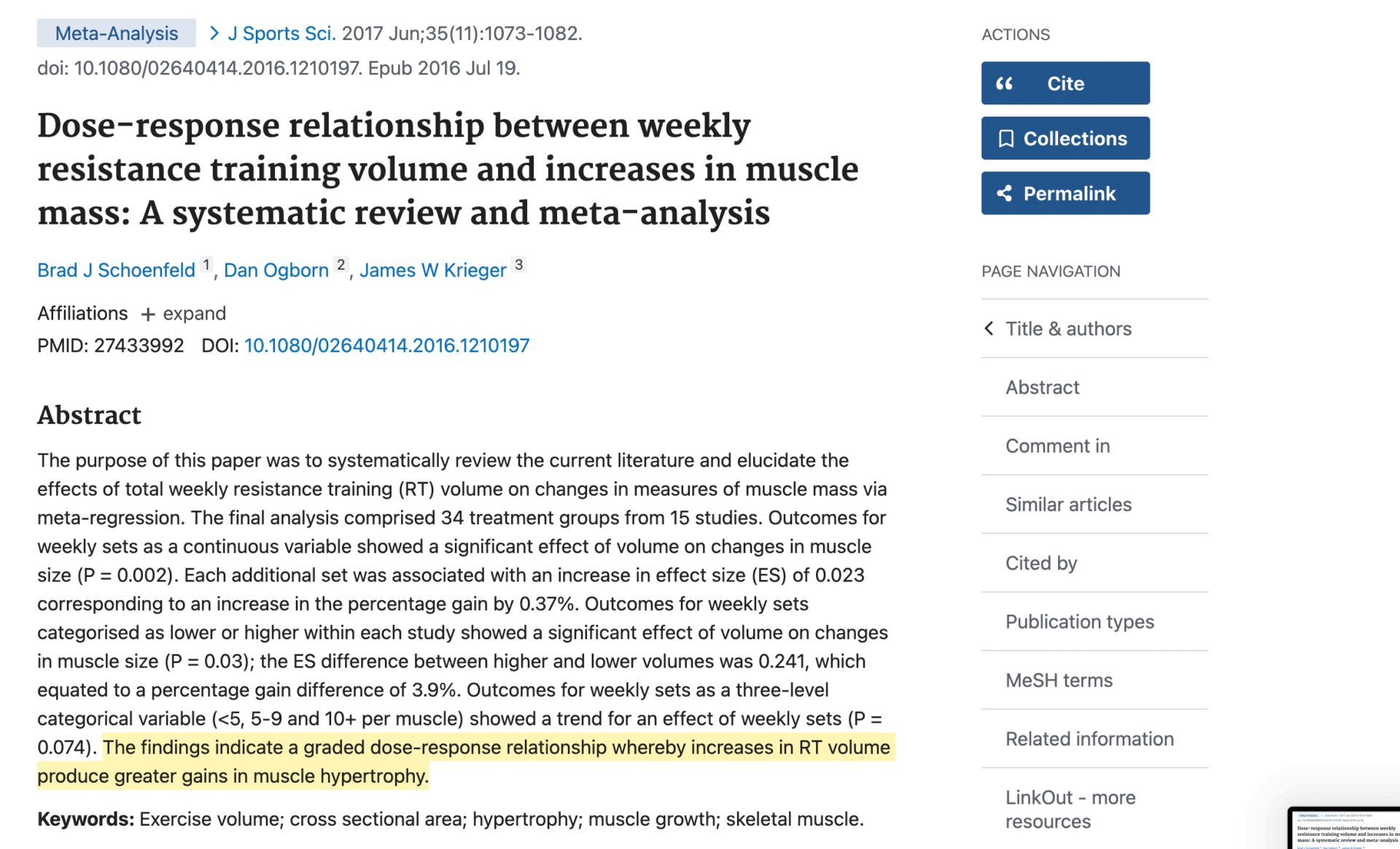
Meta-analyses show a dose-response trend: more sets per week tend to produce more hypertrophy, up to a certain point.
Intensity of effort: RIR to guide adaptation without overworking beginners
The program uses simple self-regulation via RIR (reps in reserve, i.e., the maximum number of repetitions in reserve):
| Week | RIR target | Focus | Practical notes |
|---|---|---|---|
| S1 | ≈ 3 (large movements) | Learning + benchmarks | Technique, trajectories, cadence, "clean" loads. |
| S2–S5 | ≈ 2 | “Clean” hypertrophy | Consistent useful volume, gradual progression (reps or load). |
| S6 | ≈ 1 (main) | Stimulus peak | Push hard on key movements, without grinding. |
| S7 (deload) | ≈ 4 + reduced volume | Relieve fatigue | Lower the number of sets + load/moderate the intensity, maintain the movement. |
| S8 | Low RIR + lower ranges on bars | Consolidation/transfer to heavier equipment | E.g.: RDL in 5–8 reps, focusing on strength and hypertrophy. |
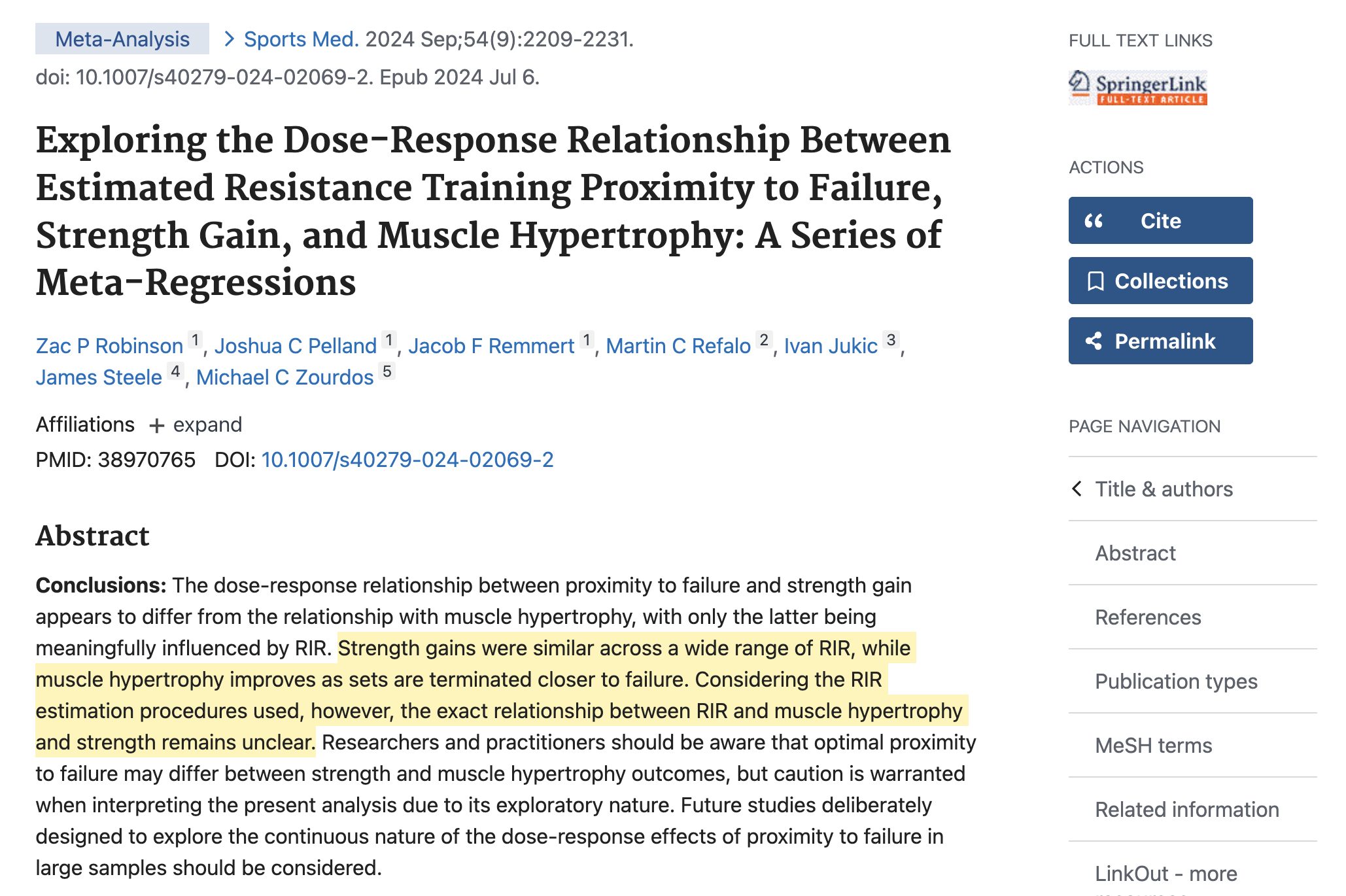
This choice is technical: training close to failure often increases the stimulus, but systematic failure is neither mandatory nor always optimal for accumulating quality volume (especially for beginners).
Measuring proximity via the RIR is an approach consistent with the recent state of data synthesis.
Weekly discharge 7
Week 7 deliberately lowers the pressure:
- fewer series,
- higher reps,
- More comfortable RIR.
The goal: reduce fatigue (physical + mental), restore performance, and come back stronger in week 8. Deloading is a widely used and discussed practice in applied literature, although the exact protocols vary (volume, effort, frequency).
Key points about this full-body program
- Hypertrophy specificity: focus on mechanical tension, progressive volume, and progressive exercises.
- Frequency suitable for beginners: frequent exposure, rapid learning.
- Fatigue management: volume ramps + RIR + deload, to keep going for 8 weeks without stagnation.
- Smart "gym" choices: machines/pulley systems for safety, bars for building a strong foundation (bench press/RDL/hip thrust).